
Tepte.com


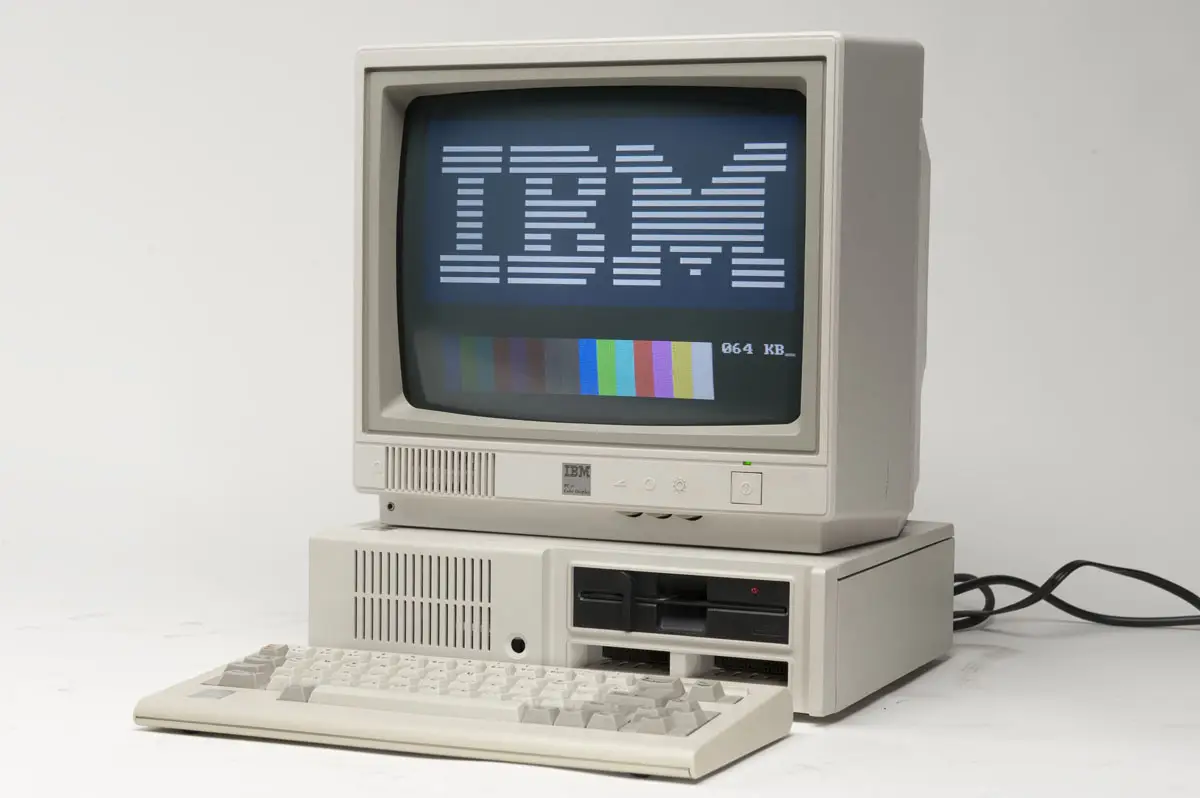
Ever wondered how computer hardware transformed from room-sized machines to the sleek devices in your pocket? This general knowledge quiz dives into fun facts about computer hardware and its evolution over decades. We've crafted 12 engaging questions covering CPU generations, storage innovations, and pivotal milestones. Grab a pen, test yourself, then check the answers with detailed explanations. Whether you're a tech enthusiast or just curious, you'll walk away with fresh insights into how processors, drives, and components shaped our digital world.
Score yourself: 0-4 correct? Time to brush up. 5-8? Solid foundation. 9-12? You're a hardware history pro! Scroll down for answers and deep dives into each topic.
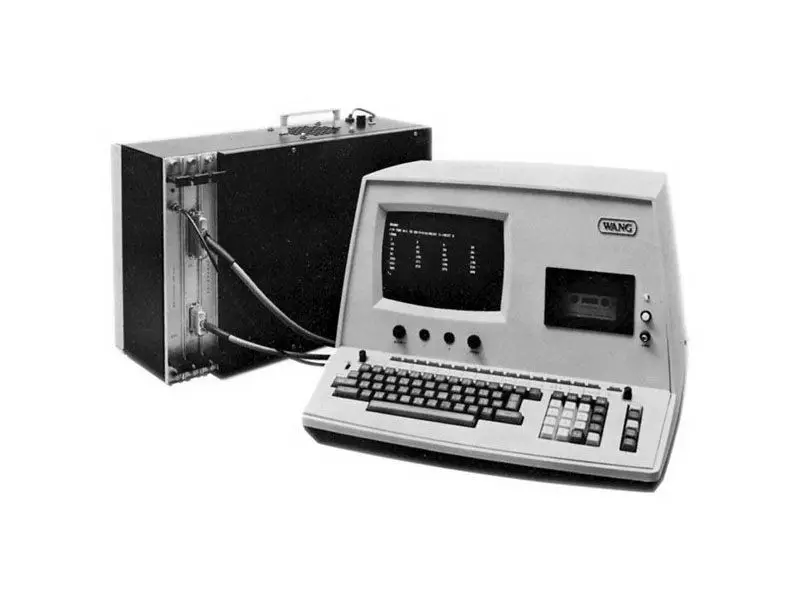
Answer: 1971
The Intel 4004 arrived in 1971, designed by Ted Hoff, Federico Faggin, and Stanley Mazor for a Japanese calculator company. This 4-bit processor ran at 740 kHz with just 2,300 transistors. It kicked off the microprocessor revolution, shrinking computer hardware from cabinets to chips. Without it, personal computers might have stayed a dream for decades.
Answer: 2,300
That modest count powered early calculators, but it set the stage for explosive growth. By comparison, modern CPUs boast billions. This fact highlights the evolution over decades: from thousands to trillions of components in the same silicon space.
Answer: IBM
IBM's 3380 model in 1980 packed 1GB across 14-inch platters, weighing 550 pounds and costing a fortune. It was a leap from earlier drives holding mere megabytes. This milestone in storage innovations enabled business data centers to handle more, fueling the PC boom.
Answer: Moore's Law
Coined by Intel co-founder Gordon Moore in 1965, it forecasted transistor density doubling every 18-24 months. Though slowing today due to physical limits, it drove CPU generations from 1970s 8-bit to today's multi-core beasts, making tech cheaper and faster.
Answer: 80 KB (8-inch) or 360 KB (later 5.25-inch)
IBM's 8-inch floppy in 1971 held about 80 KB, enough for basic files. By the late 1970s, 5.25-inch versions hit 360 KB. These removable storage media were game-changers for software distribution before CDs and USBs took over.
Answer: ENIAC
ENIAC (Electronic Numerical Integrator and Computer) debuted in 1945 at the University of Pennsylvania. It filled a 1,800-square-foot room, used 18,000 vacuum tubes, and computed artillery trajectories. Its programmability via plugboards influenced all future hardware history.
| Era | Key Milestone | Impact on Hardware Evolution |
|---|---|---|
| 1940s | ENIAC (vacuum tubes) | Proof of electronic computing feasibility |
| 1960s | Transistors replace tubes | Smaller, reliable machines |
| 1970s | Microprocessors (Intel 4004) | Personal computing begins |
| 1980s | 1GB HDDs and RISC CPUs | Business and home adoption |
| 1990s-2000s | Multi-core and SSDs | Mobile and cloud era |
| 2010s+ | Quantum experiments | Beyond silicon limits |
This table summarizes hardware evolution over decades, showing how each jump built on the last.
Answer: Reduced Instruction Set Computing (RISC)
RISC architectures, like MIPS in 1981, simplified instructions for faster execution. Intel's x86 followed suit with pipelining. These advances pushed clock speeds from MHz to GHz, enabling graphical interfaces and gaming.
"Overlooking the lessons of hardware history can lead to costly mistakes today—like chasing raw speed without efficiency, as we saw with overheating Pentium 4s in the early 2000s." – A veteran chip designer reflecting on balancing power and performance.
Answer: From magnetic core (doughnut-shaped wires) to Dynamic RAM (DRAM) chips
Magnetic core RAM in the 1960s was reliable but bulky. Intel's 1103 DRAM in 1970 stored 1 KB per chip using capacitors. This shift slashed costs and size, making memory affordable for PCs by the 1980s.
Answer: Opteron (Hammer architecture)
Released in 2003, AMD Opteron brought 64-bit computing to x86, supporting more RAM for servers. It pressured Intel to catch up, accelerating the transition from 32-bit systems and boosting CPU generations.
Answer: Magnetic tape and early keyboards
By the mid-1960s, keyboards and tapes supplanted punch cards, which dated to the 1890s census machines. This made programming interactive, speeding computer hardware development.
Use this checklist to explore hardware history further—practical steps for any tech quiz prep.
Answer: Solid-State Drives (SSDs)
Samsung's 32GB SSD in 2006 evolved into consumer staples by 2009. No moving parts meant silence, shock resistance, and 10x speeds over HDDs, revolutionizing laptops and data centers.
Answer: The computer mouse
Douglas Engelbart's wooden mouse with wheels debuted in a 1968 demo, but prototyped in 1964. It made graphical interfaces intuitive, essential for Apple's Macintosh in 1984.
From ENIAC's vacuum tubes to SSDs' flash magic, computer hardware evolution over decades is a tale of ingenuity. These fun facts remind us progress isn't linear—it's driven by bold risks. How'd you score? Share with friends, and dive deeper into processors, storage, or milestones. Your tech IQ just leveled up!
Published: Thursday, January 22, 2026 Viewed 3 times.
tepte.com: Your Questions and Answers Resource with a Wealth of General Knowledge
Are you seeking a one-stop destination for comprehensive knowledge and answers to your burning questions? Look no further than tepte.com! Our platform is your go-to source for a wide range of information, all conveniently presented in an easily accessible question and answer format.
At tepte.com, we pride ourselves on being your reliable knowledge hub. Whether you're curious about technology, science, history, or any other subject under the sun, our extensive General Knowledge (GK) knowledge base has you covered. We've made it our mission to provide you with in-depth insights and facts on an array of topics. Read more
